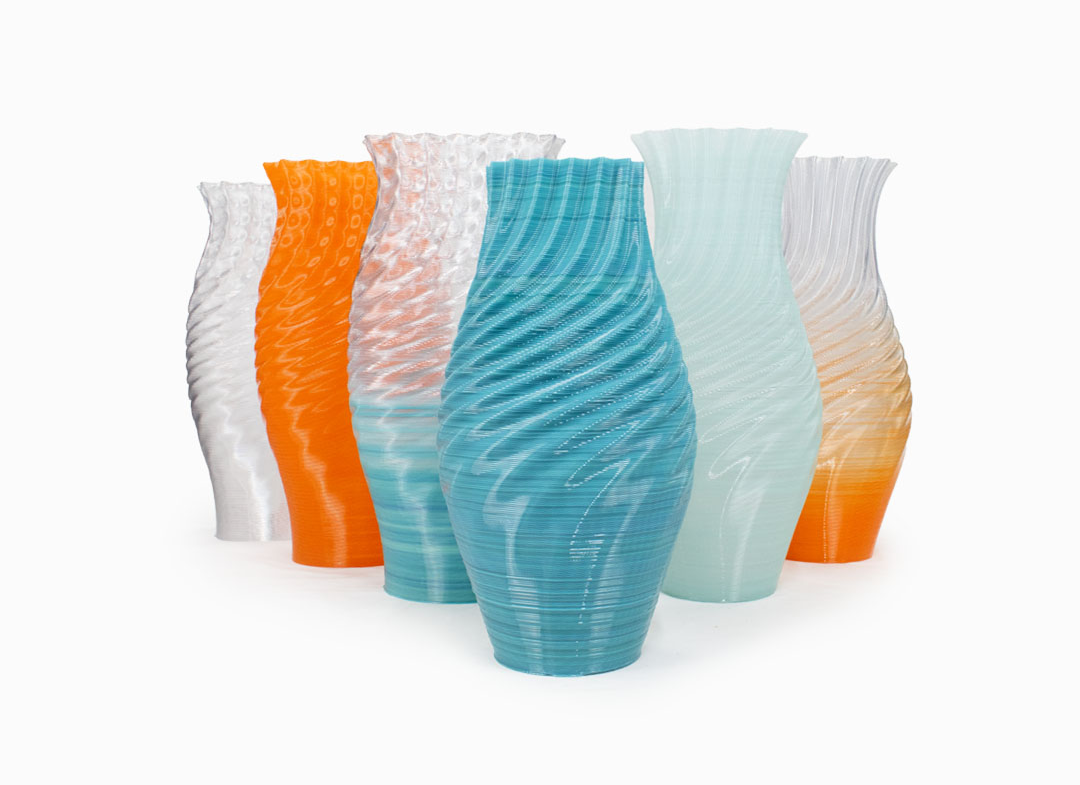
When colour becomes part of the design
Large-scale 3D printing has traditionally been driven by structural performance and functionality. Increasingly, however, clients are looking beyond technical reliability. They want products that are visually aligned with their environment and brand.
Colour has therefore become a defining factor. From subtle tones that blend seamlessly into an interior to bold shades that create a statement, demand for customised colour solutions continues to grow.
Beyond selecting the right shade
In large-scale 3D printing, colour is not an afterthought. It is part of the design strategy. To meet this demand, we collaborate closely with specialised suppliers who understand both our quality standards and aesthetic requirements.
Together, we develop high-grade masterbatches that enable:
Precise colour matching
Consistent results across production runs
Reliable reproduction in complex projects
This ensures that the final product reflects exactly the intended visual identity, without compromising technical integrity.
Colour in its environment
What differentiates our approach is that colour is always considered in context.
We evaluate how it interacts with:
Existing interiors or architectural elements
Established brand identities
Light conditions and surface textures
Material selection is equally important. Surface finish, durability, UV resistance and tactile qualities all influence how colour is perceived. A matte surface behaves differently from a smoother one. An outdoor application demands different performance characteristics than an indoor object.
Where engineering meets aesthetics
By combining colour development with the appropriate material selection, we create products that are both technically robust and visually refined.
The result is a balanced solution in which design and performance reinforce each other. Not off-the-shelf colour choices, but tailored applications that fit their intended context.
In this way, we translate our clients’ ambitions into custom-made solutions where colour, material and form are developed as one integrated concept.