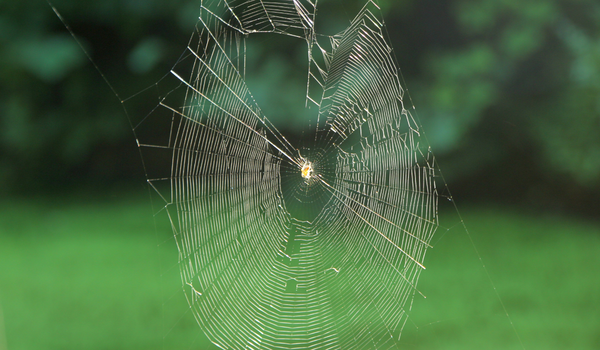
Spiders Inspire a New Kind of Plastic Made from Corn Proteins
Researchers have developed a new plant-based material that closely resembles traditional plastic, but is made entirely from proteins derived from corn. The material, which the researchers call “plantymers,” takes inspiration from how spiders produce their extremely strong silk.
The study, published in Nature Communications, was carried out by an international research team including scientists from Wageningen University & Research and the University of Amsterdam.
Inspired by spider silk
The key idea behind the material comes from nature. Spiders produce silk through a process that transforms proteins into extremely strong fibers. The researchers replicated a similar mechanism using plant proteins.
First, the proteins are concentrated into a liquid phase. Then they are mechanically stretched, which helps align the molecules and form a strong, stable material.
This combination results in a structure with properties similar to spider silk.
A potential alternative to conventional plastics
According to the researchers, many existing bioplastics still fall short in strength and durability compared to petroleum-based plastics. The new plant-based material could help bridge that gap.
In addition to its mechanical strength, the material also performs well as a barrier, effectively blocking oxygen and moisture.
Applications in food packaging
In initial tests, the material was used as a thin film to help preserve bananas, slowing down ripening and reducing discoloration. This points to potential applications in sustainable food packaging and other protective materials.
Looking to nature for solutions
The researchers highlight that this work demonstrates how natural processes can inspire more sustainable material design. By mimicking how spiders build silk, they show a possible pathway toward stronger and more environmentally friendly plastic alternatives.