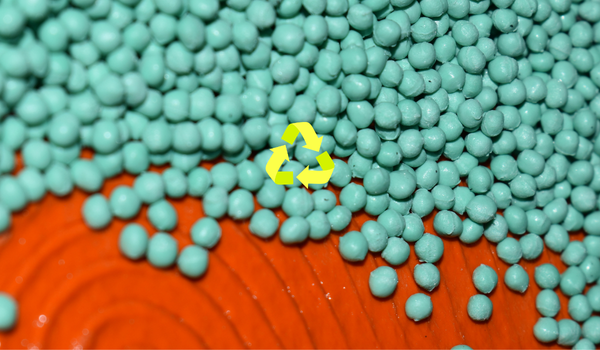
When Waste Becomes a Beginning: A New Chapter in Advanced Recycling
A new approach to material use
Plastics are deeply embedded in modern life. In industries ranging from food packaging to healthcare and transportation, they enable solutions that would be difficult, or impossible to achieve with other materials. Their combination of strength, flexibility, and low weight makes them indispensable in many applications, including 3D printing processes like those at Raw Idea.
At the same time, the way we manage plastic materials is under increasing scrutiny. The global recycling rate remains below 10%, and for complex, multi-layered materials it is often even lower. These are precisely the materials that deliver critical performance benefits, particularly in preserving food quality and safety.
This tension between usefulness and sustainability defines the current challenge.
The value, and dilemma of plastics
It is important to recognize why plastics are so widely used. Their performance characteristics enable efficiency gains across supply chains, reduce transport emissions through lightweight design, and support essential medical applications.
In short, many modern innovations depend on them.
However, the issue is not their existence, but their afterlife. Once these materials reach end of life, they often enter waste streams that are not equipped to handle their complexity. This results in lost material value and significant environmental impact.
Why traditional recycling is not enough
Conventional recycling systems are largely designed for simple, single-material streams. Many high-performance plastics, especially multi-layer composites, fall outside these systems.
As a result, materials that deliver the highest functional value are often the hardest to recycle. This creates a structural gap between material innovation and material recovery.
Closing this gap requires a new approach: advanced recycling.
What advanced recycling enables
Advanced recycling technologies make it possible to process plastic waste that traditional methods cannot handle effectively. Instead of treating complex plastics as non-recyclable, these technologies break them down or reprocess them into usable raw materials.
This opens up new pathways for circularity, allowing materials to re-enter production cycles rather than ending up as waste.
While still evolving, these methods represent a critical step toward more complete material recovery systems.
Connecting recycling with additive manufacturing
At Raw Idea, this discussion is closely linked to how we work with materials in 3D printing.
Additive manufacturing already reduces material waste compared to traditional subtractive production methods. Material is used only where needed, minimizing offcuts and inefficiencies.
By combining this with advanced recycling strategies, a more integrated system emerges, one where material efficiency and material recovery reinforce each other.
This creates a production mindset that considers not only how materials are used, but also how they can be reintroduced into the system afterward.
A shift toward circular material thinking
The key shift is conceptual. It is no longer enough to think about performance alone; the origin and future of materials must also be part of the design process.
Advanced recycling supports this shift by extending the lifecycle of plastics that were previously considered difficult or impossible to recover. In doing so, it helps bridge the gap between high-performance material use and environmental responsibility.
Toward a circular material system
As industries continue to demand higher performance materials, the question will not be whether plastics remain relevant but how intelligently they are managed across their entire lifecycle.
Advanced recycling, combined with efficient production methods like 3D printing, points toward a more circular system where material value is preserved for longer and waste is significantly reduced.
The future of plastics will depend on how effectively we keep materials in use, rather than allowing them to become waste.