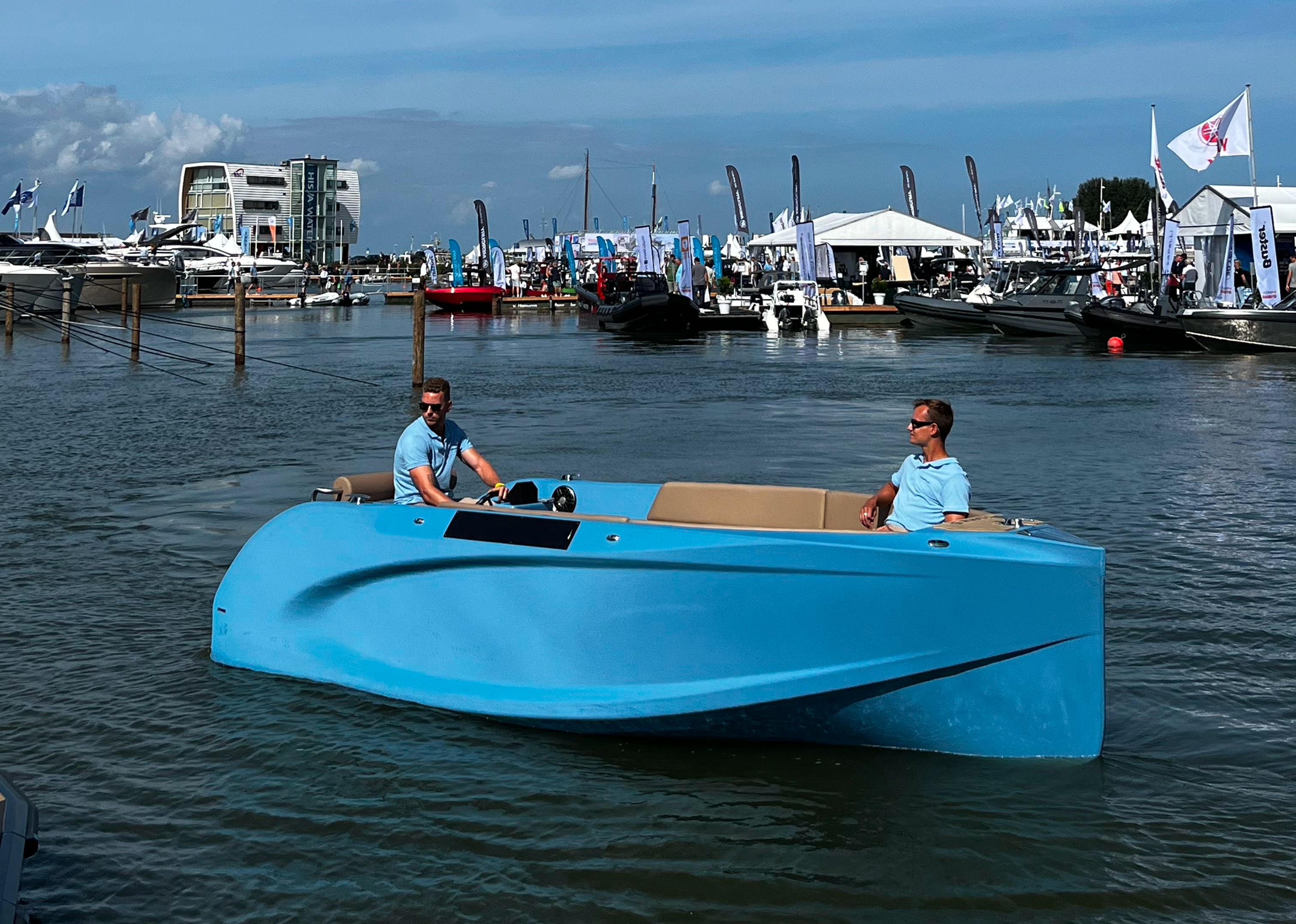
One piece or assembly? Choosing the right approach in large-scale 3D printing
In large-scale design and manufacturing, one of the earliest and most underestimated decisions is whether a product should be printed as one monolithic piece or designed as an assembly of parts. There is no universal “better” solution. The right choice depends entirely on context, constraints and intended use.
When a one-piece design makes sense
A single-piece design is often the strongest option when structural continuity is critical. Without joints or fasteners, there are no stress concentrations or tolerance stacking issues introduced during assembly. In large-scale additive manufacturing (LSAM), this typically results in:
Higher overall stiffness
Cleaner and more predictable load paths
Faster production once printing begins
One-piece designs are particularly effective when:
The geometry fits within the printer’s build envelope
Transportation of the printed object is manageable
Post-processing access is not restricted
Assembly time and labour need to be minimised
The trade-off is largely upfront. Longer print times, higher material exposure if a failure occurs mid-print, and limited flexibility once the design is finalised all need to be considered.
When assemblies are the smarter choice
Assemblies introduce modularity, which brings flexibility and resilience into the production process. Printing multiple components allows for parallel manufacturing, easier handling and safer iteration. If one component fails, the entire product is not lost.
Assemblies are often the preferred approach when:
The object exceeds machine size or transport limits
Different parts have distinct functional or material requirements
Repairs, replacements or upgrades are expected over time
Surface quality or internal access is important
The downside lies in the joints. Mechanical connections, welding or bonding require careful engineering. These interfaces introduce tolerances, potential stress risers and additional production steps that must be deliberately designed — not improvised.
How engineers should make the decision
This decision should never be driven by habit or aesthetics alone. Instead, engineers should evaluate:
Load paths and structural behaviour
Manufacturing risk versus assembly complexity
Logistics, installation and transportation constraints
Lifecycle considerations such as repair, reuse and recycling
At RAW Idea, we often apply hybrid strategies: printing functionally critical cores as one piece while modularising non-critical elements. True innovation lies not in choosing one approach over the other, but in knowing when and how to combine both intelligently.